Section 4: Random ideas
On Book Banning
- created
- to be added
- status
- draft
Book banning seems obviously wrong to most people, and that’s because it usually is. Almost everyone finds it wrong when a government bans a book because it criticizes said government. That said, not all books are about criticizing the government, and it is more of a grey area that varies from book to book than a black-and-white one.
The first case to consider is banned books that break other laws. An example would be the 1999 Belgian book Uitgeverij Guggenheimer, which made derogatory remarks about a specific person’s looks and profession. While there is an argument to be made for defamation to be legal (although that would be hard to argue), the point is that breaking a separate law through a book was the reason for the ban. Any book could do this; for example, I bet not many people would argue to unban child pornography books.
Similarly, the army approved the book *Operation Dark Heart *by a former lieutenant colonel in January 2010, which was then published. Then, in September of that year, the U.S. Department of Justice overruled the ruling, purchasing and destroying all 9,500 copies, citing concerns that certain information in the book contained classified information that could damage national security. While this book was banned because of laws around national security, this story includes something integral to the idea of banned books. The book already had to undergo checkpoints that limited its potential publication, showing just one of the ways books face more pressures besides being outright banned that constrain information.
To publish a book, one needs to find a publisher. This seemingly simple task could be challenging if one’s ideas are so obscure that nobody wants to publish them. Thus, the book has been practically banned, even without government involvement. However, there are caveats to this, as money is a powerful tool. Additionally, there are usually publishers dedicated to ideological goals that will publish books most “normal” publishers probably wouldn’t. For example, *the Anarchist Cookbook *(and books like it) can be published because information on synthesizing drugs and creating explosives agrees ideologically with the publisher. The FBI investigated the book but could not ban it because it does not tell people to harm anyone. The book is still considered contraband, and some may feel it should be banned anyway for its potential danger. The *Anarchist Cookbook *aside, there are more ways word information is restricted besides government bans.
For instance, take the U.S. media as a whole. Even if a media publisher *can *report on a topic, they may choose not to simply because they are at the will of both their subscribers and, mainly, their advertisers. Company executives might avoid the hassle if a story is too divisive or against the status quo that their newspaper/channel/whatever represents. The internet has changed this, but that is a topic for a different time.
There are more reasons why a government could justify banning a book. One of them is trauma. Imagine you are an Austrian citizen after WW2 who has suffered tremendous losses. Maybe your son died, and your cousins were forced to flee. The war gave you PTSD or more. Now imagine walking past a bookstore and seeing the manifesto of the man who inflicted severe damage on not just your life but your entire country. Some could argue that the government should tackle the content head-on, thus allowing the book to be legal, but there are other, better ways to handle denazification. In this context, I understand the position the Austrian government and others took in Europe.
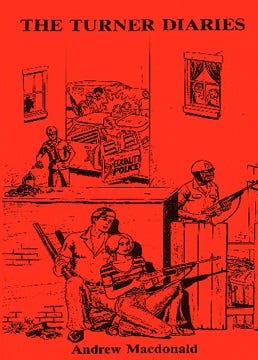
A book could also advocate a “dangerous” or “hateful” worldview. This is very context-dependent and should be questioned on a case-to-case basis, as what even is a “dangerous” worldview, and at what point is considered breaking the law? Nevertheless, take the book The *Turner Diaries. *The 1978 book is by William Luther Pierce (under the pseudonym Andrew McDonald), a neo-nazi leader of a white nationalist organization. The book takes place in 1999, following Earl Turner and his involvement in a white nationalist movement called the Organization. Long story short, the Organization systematically kills all non-white and Jewish people. The story is estimated to have influenced over 200 real-life killings, with some having quoted it directly or copied attacks in the book. Canada banned the book in 1978, but the book is technically legal in the U.S. despite being removed from Amazon in 2021. We must ask, why should this book be allowed to exist? The death count associated with the book makes me sick, and a ban probably could have prevented people from dying. What is the price for personal liberties in this case, and was it worth it to let the book be sold? Yet even if the government wanted to ban this book or any new release like it, they would have a problem — the internet.
The internet makes the entire debate almost superficial. In 2019, Brenton Harrison Tarrant attacked two mosques in New Zealand, killing 50 people. Before the attack, he released a manifesto on online forums called the Great Replacement. Not only is the book hateful, but it is full of false information. The New Zealand government, which has a quite considerable banned book list at 1313, immediately banned the publication. The thing is, New Zealand was the only country that banned it. Thus, anyone in New Zealand can access the book by quickly downloading a VPN and switching to anyone where the book is not banned. Any book can be accessed through this process. Most books can be found through a Kindle-like service or pirating. Enforcing a modern-day book ban is a nearly pointless policy, as it would require all governments of the world to ban said book because only when things are illegal online in all countries can enforcement be done (for example, child pornography). Whether this modern-day change is good or bad, I leave it up to the reader.
So, should the government pursue a policy of banning private companies from selling “harmful” books? On the one hand, it limits access, yet on the other, most consumers of *The Turner Diaries *or similar books likely got them through pirating off a link on an alt-right platform anyway. Thus, my conclusion would be that if you want to get *The Turner Diaries *and related harmful books online, they would have to be age-restricted, come with a warning, and hopefully even have a pamphlet or link to a video that explains both the harm and lies of some of these books. However, I understand that many may not trust this. The final thing is that a small task force could be created to create nuanced plans for each book considered “harmful,” the point is to continue allowing people to get the book while ensuring the risks are known. The company would still have the freedom to choose to publish or not, the consumer to buy or not, just more safety would be placed in the process.
I think a solution similar to this would be more productive in the modern day than banning books, as banning a book brings attention to it anyway.