Section 0: Required Introductions
Foundational Piece
- created
- to be added
- status
- draft
The goal of this project is to develop a critique of neoliberalism/current politics, find innovative policy initiatives, and create a widereaching economic/political system, all in as simple wording as possible. I also hope to develop my own views along the way. A good prerequisite is the book *Invisible Doctrine: A Secret History of Neoliberalism, *which is not required but does provide a lot of useful background in a short time, with straightforward concepts.
Regarding ideology and identity in the modern world, it is obvious that capitalism (specifically neoliberalism) and consumerism have won. It is not just a win, but a complete domination, to the degree that the quote “it is easier to imagine the end of the world than the end of capitalism” is true. This may sound pessimistic, but humans are quite adaptable, and I believe not all is as bad as it may appear.
To begin with, on this topic, it is important to have a basic understanding of what capitalism actually is. Capitalism is an economic system based on private ownership of the means of production. To explain this, we must differentiate between means of production and means of subsistence. Means of subsistence are things you require for your day-to-day life, like food, clothing, shelter, and healthcare. You also indirectly require the means of production to make these things, such as land, tools, and factories. Due to the fact that you are not able to generate means of subsistence yourself, you are required to participate in a market that generates a wage for you to do this. Thus, in capitalism, the means of production can be owned by individuals. This is as opposed to ran in other manners, such as a factory collectively by the workers with a council to implement decisions or a company with direct voting for policy implementation. Other economic systems have nothing to do with collective ownership of your private domicile or your toothbrush, as is sometimes stated.
I believe that, just as we moved from slavery to feudalism to capitalism, we possess the ability to move to a new system. Nevertheless, while I am a critic of many elements of Capitalism, there is a good deal to praise. Advances in technology, life expectancy, standards of living, etc. The list goes on.
The question then becomes, would any other system find it impossible to develop these innovations? And would a new system not be able to continue these advances? To this, I reject. A scientist or computer engineer or doctor do not require the intrinsic economic system behind Capitalism and could continue their work in other systems. It is only that Capitalism has so dominantly consumed our economic system and even our ways of thinking that it has become hard to imagine life under other systems, not that they cannot exist.
One aspect of Capitalism that is easy to see an issue with is the surrounding identity and consumerism. Obama’s continuation of neoliberal policies and choice to bail out the banks over actual structural changes led to Occupy 2011, which put pressure on the “elites”. Perhaps both intentionally and unintentionally, two things changed.
For one, the Democrats/progressives shifted even further away from policy surrounding affordability and helping the common person, instead emphasizing identity politics. It was this shift that alienated many lower-income voters and created Trump. Further, this is also the beginning of slop consumerism. Before, there was no doubt consumerism, but it has led to a new type. Tinder, Fortnite, Twitch, OnlyFans, TikTok/short form content, Shein, Skims, Fenty Beauty, Birria Taco, White Claw, Dubai chocolate, etc. The new consumerism is based on short-term/mindless thinking, with the product often centered on appearance rather than long-term peace of mind.
They are sensational experiences to distract from the relatively important parts of one’s life: work, family, (obtaining) food, community, spirituality, etc.
Identity politics can also be distractions, pointless arguing over things that likely don’t matter when the focus should be on improving people’s lives, such as economically, in the workplace, and creating meaningful communities. This especially means using material power to stop real discrimination.
The slop consumerism introduces an inability for a social/political movement to edit our world. We are limited in scope by what the populus has already come to accept: We can never go back. By this I mean, once a product is set to mean a certain standard of living, for example, endless pointless products - ornaments or Funko pops or getting a new phone yearly - then it is near impossibleto go back without a broad loss of social support.
For example, meat is consumed in an unsustainable way, as we use much more water to produce it than we have aquifers to support in the long term. There are also high levels of meat subsidies, allowing more people to eat it. I eat meat, although it is because I am underweight, and I plan on stopping in the future, but I am not hating on people who do. The point is, what will happen in the future when a reasonable government says, “Hmm, we are using a lot of water for meat, maybe we should rethink the way our farms operate so as to have water for the future?”
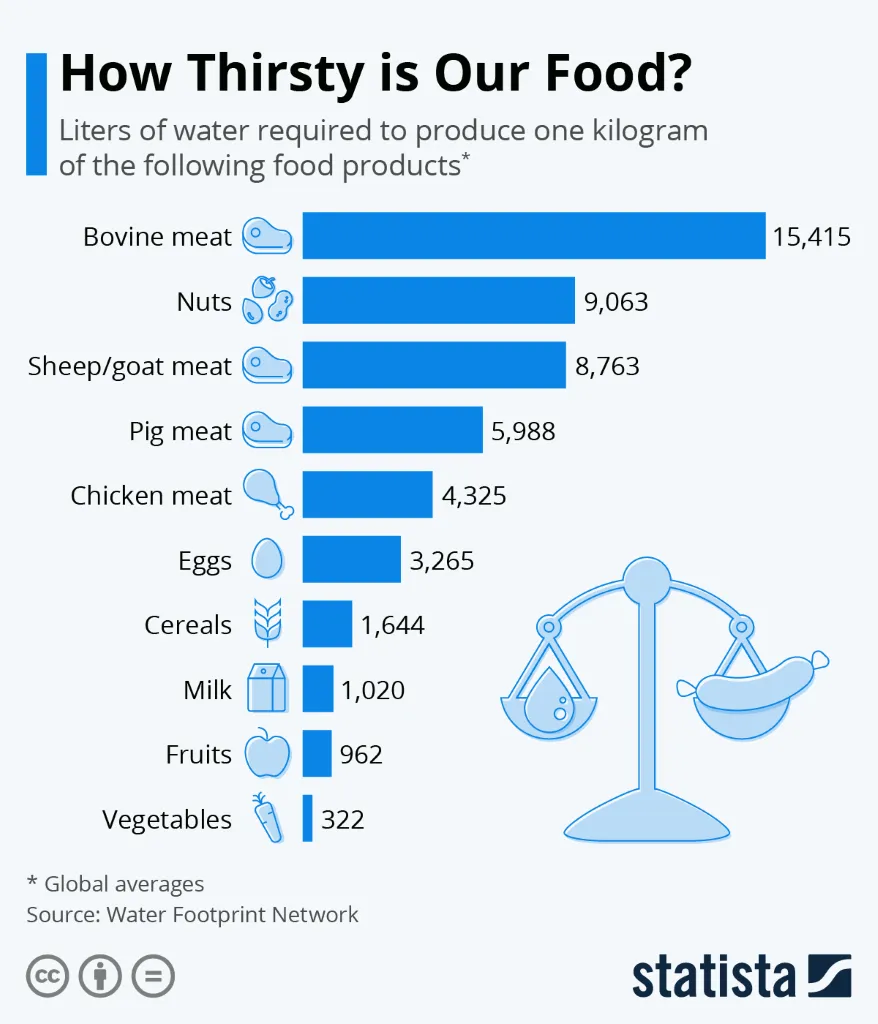
This will reduce a standard the populace has come to expect, and thus there would likely be many protests and the like, with that government losing legitimacy. This applies to hundreds of products, but a government cannot say, “Hmm, we have plenty of clothes, in fact, we have enough clothes to last for 7 generations. Maybe we should consider cutting down on clothing production”. Even as I write this, it sounds stupid to me, and I am sure it sounds stupid to you. But that is the point. We are completely limited by what capital wants, and as a people have little agency to change to a new world.
I would propose shifting production toward “buy it for life” products. This just means products that can be used for as long as possible and repaired, so less work goes into their production, and much less material is used. For example, in the 50s, Timex, a watch company, realized it could just give customers a new watch instead of repairing the one they had. This is a fundamental problem, as it led to planned obsolescence. Companies would rather you buy something that dies after a couple of years than something that lasts a lifetime, because they can keep making a profit from the former.
Imagine an economy full of products that lasted a lifetime. We would thus require less work to produce the products, and, conversely, have more time and resources to devote to worthwhile projects.
Yet our political and economic thinking is so deeply ingrained in neoliberal capitalism that changes such as this are not seriously advocated for/considered by major parties. It is clear that the West’s political and economic system is flailing, and it simply continues with more of the same (Trump is a change, but it is effectively more Neoliberal policy with minor twinges to seem different). More of the same works if everything is satisfactory, but it isn’t.
One problem is that people view our political system as sacred. Society, of course, progresses and changes over time, and so should our political systems. After all, it was only through the American Revolution’s radical ideas at the time that a new system could be born. We cannot expect any system to last forever, so we should at least consider new systems or even simple ideas within those systems.
That is why in the next piece, I will list some ideas/political philosophies we should at least consider in the modern world. For now, I think the US should adopt basic social democracy for say 5 years, with the goal of implementing Western European/Nordic-style policies. After this, a period of ~10 years of radical social democracy, with the implementation of experimental policies. When this has reached a satisfying point, then a completely new structure should be adopted. That new structure is what I hope to create ideas around.
To those who call for revolution and see this as reformist, I understand. I remain skeptical of revolutionaries’ ability to implement a satisfactory system in the modern world’s complexity. Take the USSR, for example. Here, the factors of production and consumption were much simpler, so a revolution could reorder them quickly and efficiently. This is at least possible today, but much harder given the complexity of our supply chains.
Look at the “Gen-Z” revolutions, all of which, to me, seem to be ethically simple but ideologically/strategically hollow. They offer no ideas about the state, how to transition between regimes, or productive forces and capital flight, instead focusing on vibe-based symbolic movements. There is nothing wrong with the protests themselves, but you need to offer a concrete political solution afterward.
A revolution’s success depends upon the trust of the general population. If the rapid change in production/consumption caused chaos, or worse, if there was no agreed-upon plan after a revolution, then the movement would quickly falter and lose support. Nevertheless, a political movement should be allowed time to implement its changes rather than expect itself to solve everything on day one.
It is important to note that a continual revolution must be upheld by society. This means that the status quo must always be questioned, as otherwise authoritarian politics/politicians establish themselves. This is another problem with revolution: not clearly defining how the system will run once the revolutionary group has power can lead to strongman rule.
Regarding social democracy, I want the US to immediately establish a welfare state to best help the many Americans who are struggling. Most European states in the 50s and 60s established welfare systems (such as healthcare) that are so popular that they are, for the most part, preserved by right-wing parties (though they do attempt to cut them). The US, despite, for example, having a 91% tax rate on the highest bracket in 1954 and 77% in 1964, never established a permanent welfare state.
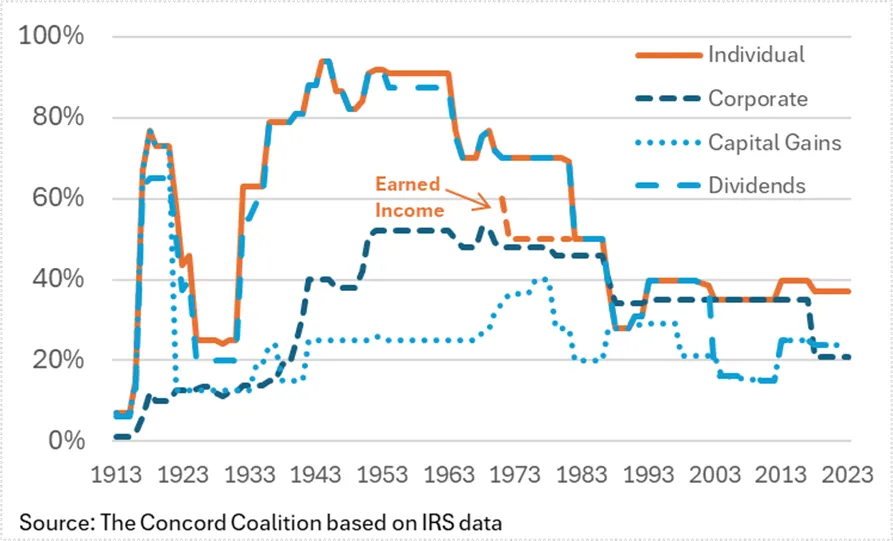
During this period (pre late 70’s), the dominant economic philosophy was Keynesian, for which intervention in the economy was implied, such as with FDR’s New Deal. Neoliberalism, first tested by Pinochet in Chile and then prominently by Reagan and Thatcher in the US and UK, encouraged free markets and government non-interference in the economy, as well as deregulation and weakening of labor. This is in addition to “trickle-down” economics, the idea that cutting taxes for the rich will lead to poor people’s lives improving. This has proven entirely untrue (Read for more: Link).
While not all, many of America’s problems can be traced to neoliberalism (which has been the dominant economic philosophy for both Republicans and Democrats since), with the US coasting on its lucrative companies.
Neoliberalism is a disaster for long-term policy because markets are not self-regulating in all respects. Many things are beneficial to society without the necessary market incentive. This is why a night-watchman state, where the only role of the government is law and defense, would lead to monopolization and a reduction in services that cannot be established profitably in the first place (roads, water management, subways, etc.).
The neoliberal experiment has led to so many of the US’s modern problems that it is hard to overstate. It has driven housing unaffordability by treating it as an investment rather than a need. Deregulation in finance led to the S&L crisis and the 2008 crash. Austerity and tax cuts slashed public spending, worsening infrastructure, transit, and education. The prioritization of corporate interests stagnated wages, leading to a lack of prosperity for many in the rich, technologically advanced USA (and other countries worldwide).
If you want to look at what appears to be the most efficient large-scale form of managing production in the world (not necessarily the best in all regards), look at China’s “State Capitalism”. They were able to take one of the world’s poorest per capita countries and create an objective superpower. With some accomplishments, including:
- lifting 800 million out of extreme poverty (1990 – 2020)
- More high-speed rail than the rest of the world combined in just 15 years
- Complete dominance in rare earth mineral production (~90%), which is required in things such as EVs, turbines, and magnets
- Extreme shipbuilding capacities, building ~50% of the world’s ships each year
- 30% of global manufacturing, 60% of electronic production, 75% of solar panels, 50% robots, 90% of drones,
- More EVs per year than the rest of the world combined
- Their own space station, first backside of the moon landing
- Automated ports/warehouses, full implementation of robotaxis in certain cities
It may be easy to say that this is due to their large population, but India has a similar population without the same results. I see it more to do with the fact that the government has long-term planning abilities and the ability to easily regulate or help markets, I.e. state capitalism. For example, one reason China has such dominance in the rare-earth metals market (important for lots of tech nowadays) is that the government has pursued this goal for the last 50 years and has encouraged it through subsidies and by setting national industrial production targets.
I think China could be seen as a successful MAGA movement – (re-)industrialization, strong national economic policy, patriotism, militarism, and certain immigration restrictions.
State Capitalism seems to be quite an effective system, as we can observe with the implementation and growth of GDP per capita in countries like Vietnam, Singapore, and Putin’s Russia (pre-Crimean annexation). All of these have massively improved GDP per capita in the 21st century through aggressive markets and strong state intervention.
As a side note, GDP per capita is the average monetary value of all final goods and services produced in a country. Here is a quick story about GDP:
’Two economists are walking down the street and pass by a pile of dog shit. One of them turns to the other and says “I’ll pay you $1000 if you eat that dog shit”. The other performs an internal utility calculation and eats the dog shit.
Continuing their walk, the second economist sees another pile of dog shit and makes the same offer to the first. The first economist also agrees, and eats the dog shit. They walk on. After a while the second economist says to the first “it feels like we’re both worse off than we were before this walk”.
The first economist replies “impossible! We’ve just engaged in 2000 dollars worth of trade!”.’
The point is, GDP doesn’t really account for the production of harmful things and can overstate importance. GDP per capita has many problems, but it can nevertheless tell us a good amount about a country, as countries with higher GDP per capita usually have higher life expectancies and rate their lives as better.
Part of this advantage stems from richer countries using strong currencies and economic leverage to use cheap labor and resources in poorer countries. Thus, the fact that higher GDP per capita indicates higher living standards and so on is closely tied to the dominance of the global market. This effectively requires their economy to participate in a system in which they are at a disadvantage, mainly because richer countries already have established production chains and currency advantages.
Back to State Capitalism. The problem I have with this system is its very effectiveness. I don’t want to see a world full of these authoritarian capitalist, consumerist countries that first prioritize profits and rely on security cameras/lower levels of political participation. If this is indeed the most viable system for countries in the “third-world” to improve their citizens’ standards of living, that is not necessarily a good thing. It is a proof of the effectiveness of State Capitalisms state/political capacity, but not an endorsement of its political free will.
As I said just now, it is buying into a system that is completely dominated by the West. If someone can do the same job at McDonald’s in two different countries but receives different wages after currency conversion, this is plainly unjust. The goal for the world is to have no major structural advantage or disadvantage at birth that seriously impacts one’s life. Every single person deserves a chance to prove themselves, to live at a satisfactory standard, and to be treated respectfully. How can we create a state that does this, and combines state utility, legitimacy, and democracy after five decades of neoliberalism?
To do this, I plan to research and create 4 sections (subject to change).
Section 1 – General opinions on basic topics, such as AI, the Fertility rate, Politicians, etc. These are mostly ideas that could be implemented through the current American political structure.
Section 2 – Creating my own political structure for America. While I respect and want to keep many of the ideas set forth by the original revolutionaries, it is true that it was made in 1776. This is what I would make if I had to design a modern-day American political structure, one that could hopefully apply to any country seeking inspiration (a doctrine for Gen-Z protests).
Section 3 – A financial/economic system that could allow countries autonomy from the manipulations in the world financial system and many of the economic problems of capitalism.
Section 4 – Random ideas