Section 1: General opinions on political topics
Healthcare
- created
- to be added
- status
- draft
In the 1950s and 60s in Europe, nearly every country implemented welfare style universal and “free” healthcare systems. There are still costs, but they are mitigated thorugh collective risk sharing. The result was such widespread public approval that even right-wing governments for the most part refuse to touch it (although they have slowly decreased funding to make the system look worse over time). Many countries around the world also adopted similar systems.
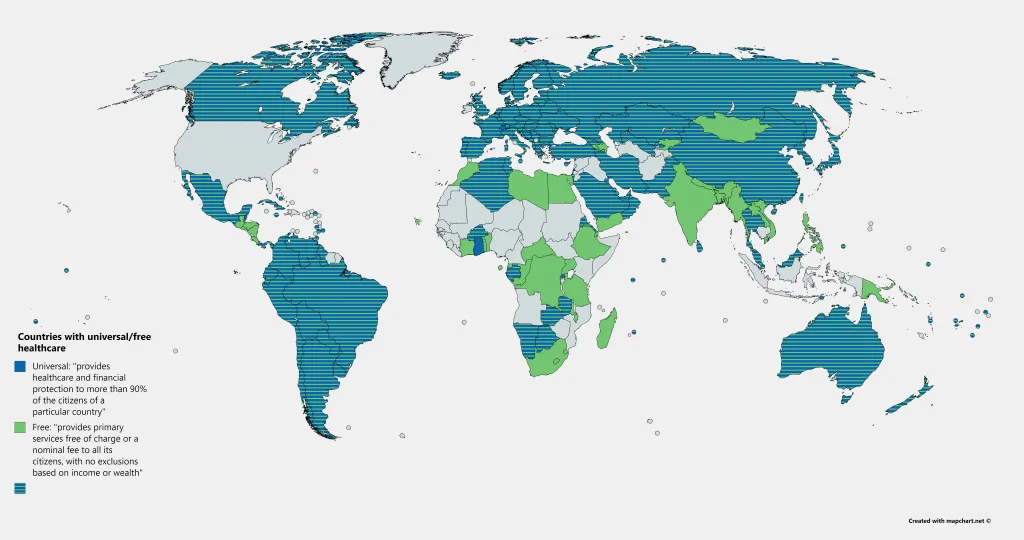
The US, however, never did. In the US, healthcare revolves around insurance companies, which one often gets through their job. The system is decent if you can afford it, as it is expensive but offers somewhat high quality and fast treatment. If you are below the top earners, however, the problems start to leak through. The general cost of medical procedures, such as follow-up care or giving birth, is entirely unaffordable for the 30 million or so Americans without insurance.
For some examples, the best insurance would still mean that giving birth would cost at least 2,000 without complications, although complications that require a longer stay could push the costs up to 5,000 to 8,000. If you do not have insurance, then the most straightforward pregnancy will cost you 10,000, and complications could push that up to 50,000. For ambulance rides, the average cost is 1,300 (source). If you get cancer, depending on the severity and your specific case, you are still looking at tens of thousands or even hundreds of thousands of dollars in costs, a frankly ridiculous stress to put on someone fighting for their life.
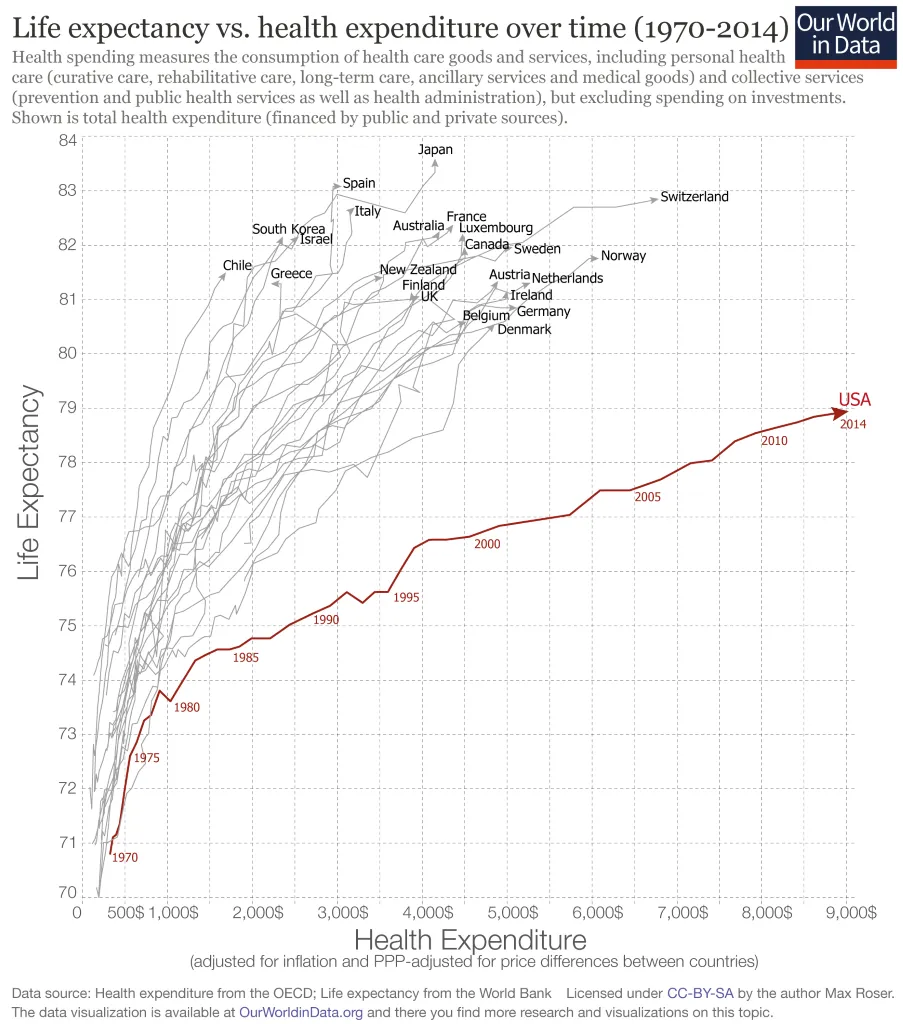
This system is completely broken, as the graph above illustrates. Also, keep in mind that it only goes to 2014, and the cost is certifiably higher now. Insurance companies can squeeze the pockets of everyday Americans, and there is little to nothing done about it. It is no wonder that healthcare lobbying is the #1 lobbying sector in the US, with more spending than oil, defense, or tech.
If you want to solve this, there are many different alternatives, each with its own pros and cons, yet all unquestionably better than the current US system. Countries like Germany, Japan, France, or Australia offer different models. These systems don’t even mean complete government running of the sector, they have market elements that can help avoid overbooking. Nevertheless, they help people by reducing costs to a reasonable level.
Also, as a quick sidenote, jobs that place human lives in their hands require a steady level of stress and sleep, and on this point, doctors being clinically sleep-deprived and overworked does not make much sense. Instead, lower medical school debt, encourage healthy working hours, and accept a slight reduction in pay, though not by much, as the salary is quite deserved. Alternatively, fund it more anyway.